Tipping
Tipping is common in Syria and is generally appreciated for good service. In restaurants and cafés, leaving around 5–10% of the bill is customary if a service charge is not already included. Small tips may also be given to hotel staff, taxi drivers, and guides.
Sockets and voltage
Syria uses plug types C, E, and L. The standard voltage is 220 V with a frequency of 50 Hz, so travelers from some countries may need a plug adapter.
Drinking water
Tap water is generally not recommended for drinking. Visitors should use bottled or properly filtered water, which is widely available in major cities.
Safety
Syria has experienced significant conflict since the start of the Syrian Civil War. Security conditions vary widely across the country, and travel may involve serious risks. Visitors should carefully follow official travel advisories and local guidance.
Body language
Handshakes are common greetings, particularly between men. Public displays of affection should be kept minimal. Using the right hand when giving or receiving items is considered polite.
Business hours
Offices generally operate Sunday to Thursday from about 9:00 AM to 5:00 PM, with Friday and Saturday typically observed as weekend days.
Languages
Arabic is the official language of Syria. Kurdish, Aramaic, and Armenian are also spoken in certain communities. English and French may be understood in some urban or tourism-related contexts.
Cultural insights
-
Hospitality
Syrian culture places strong emphasis on hospitality, and guests are often welcomed with tea, coffee, and food.
-
Respect for religion
Islam plays a major role in daily life, and visitors should respect religious customs and dress modestly near mosques.
-
Traditional etiquette
Greeting elders first and maintaining polite conversation are important social norms.
-
Historic heritage
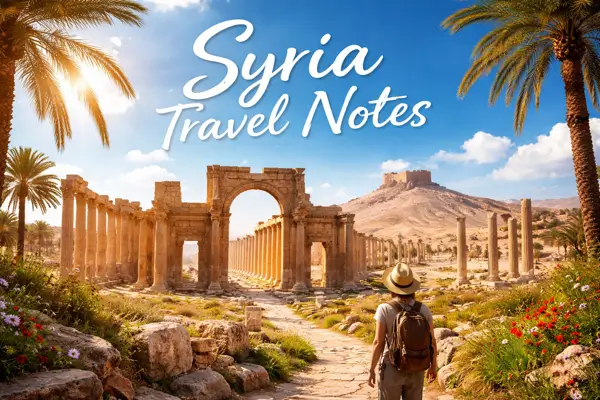
Syria has a long cultural and historical heritage reflected in its architecture, traditions, and cuisine.