Tipping
Tipping is customary and expected in Morocco. In restaurants, 5–10% is typical if a service charge is not included. It is also common to tip hotel staff, guides, and taxi drivers. Small change is often given for everyday services.
Sockets and voltage
Morocco uses plug types C and E. The standard voltage is 220 V with a frequency of 50 Hz.
Drinking water
Tap water is not recommended for drinking. Bottled water is widely available and should be used for drinking and brushing teeth. Avoid ice unless you are sure it is made from purified water.
Safety
Morocco is generally safe for travellers, but petty crime such as pickpocketing can occur, especially in busy areas and markets in cities like Marrakesh and Casablanca. Be cautious with unofficial guides and avoid poorly lit areas at night.
Body language
Handshakes are common, often accompanied by polite greetings. Use the right hand when giving or receiving items. Public displays of affection should be limited, especially outside tourist areas.
Business hours
Business hours are typically Monday to Friday, around 9:00 AM to 6:00 PM, often with a lunch break. Many shops close on Fridays for prayers or have reduced hours. Markets may stay open later into the evening.
Languages
Morocco has two official languages: Arabic and Amazigh (Berber). French is widely used in business, government, and everyday communication. Spanish is also spoken in some northern regions.
Cultural insights
-
Dress modestly
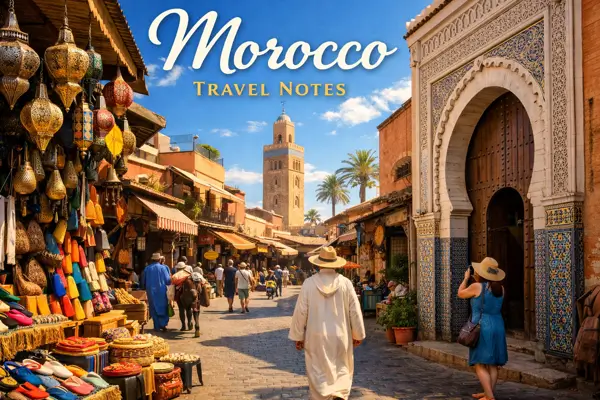
Especially in rural areas and religious sites — covering shoulders and knees is recommended.
-
Bargaining culture
Negotiating prices is common in souks and markets.
-
Religious customs
Islam plays a central role in daily life; be respectful during prayer times and the holy month of Ramadan.
-
Hospitality
Moroccan culture is known for its hospitality — offering tea to guests is a common and important tradition.