Khorkhog (Mongolian Barbecue Stew)
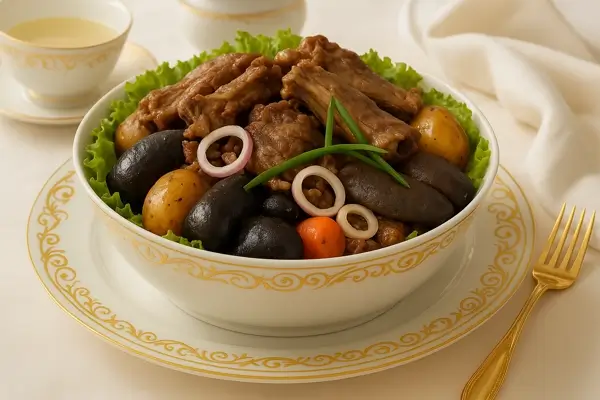
Experience the rugged and authentic taste of Mongolian cuisine with Khorkhog, a traditional barbecue stew cooked with hot stones inside a metal container. This unique cooking method infuses tender meat with smoky flavors, creating a hearty, rustic dish that embodies the nomadic spirit of Mongolia. Perfect for outdoor gatherings or adventurous home cooks, Khorkhog delivers warmth and rich flavor in every bite.
Ingredients
- 2 lbs (900 g) lamb or goat meat, cut into large chunks (with bones for flavor)
- 4–5 medium potatoes, peeled and quartered
- 3 carrots, peeled and cut into thick slices
- 1 large onion, sliced
- 1–2 cloves garlic, crushed
- Salt to taste
- Black pepper to taste
- Optional: cabbage, bell pepper, or other vegetables
- 10–15 smooth, round stones (about the size of an egg), cleaned and heated until red-hot
Instructions
-
Prepare the Meat and Vegetables
Cut the meat and vegetables into hearty chunks. Season generously with salt and black pepper.
-
Layer the Ingredients
In a large metal pot (traditionally a milk can or pressure cooker), place a few hot stones at the bottom. Add a layer of meat, then vegetables, followed by another layer of stones. Continue layering until all ingredients and stones are used. End with stones on top to ensure even heat distribution.
-
Seal and Cook
Seal the pot tightly with a lid. If using a modern pot, make sure it’s well-sealed to trap the steam and heat. Cook over a medium fire or stove for about 1 to 1.5 hours, occasionally shaking the pot gently to mix the flavors.
-
Release and Serve
Carefully open the pot — steam will escape, so be cautious. Remove the stones (they will be extremely hot). Serve the meat and vegetables on a platter. Traditionally, the hot stones are passed around for guests to hold briefly for good luck and warmth.
Serving
Serve Khorkhog hot, with a side of fresh salad or Mongolian flatbread (boortsog). Pair it with tea or airag (fermented mare’s milk) for a truly traditional experience.
Khorkhog is more than a meal — it’s a cultural ritual of sharing and celebration. Whether cooked over an open fire or adapted for the kitchen, this dish captures the essence of Mongolian hospitality and the wild, open steppe.