Tipping
Tipping is customary in Peru. In restaurants and cafés, leaving around 5–10% of the bill is common if a service charge is not included. Small tips are also appreciated for hotel staff, taxi drivers, and tour guides.
Sockets and voltage
Peru uses plug types A, B, and C. The standard voltage is 220 V with a frequency of 60 Hz, so travelers may need a plug adapter depending on their devices.
Drinking water
Tap water is generally not safe to drink. Visitors should use bottled or properly filtered water, which is widely available. It is also recommended to avoid ice unless it is made from purified water.
Safety
Peru is generally safe for travelers, especially in popular tourist destinations. However, petty theft such as pickpocketing can occur in crowded areas and on public transport. Visitors should keep valuables secure and remain aware of their surroundings.
Body language
Handshakes are common when greeting someone. Friends and acquaintances may greet with a light cheek kiss. Polite and friendly communication is typical.
Business hours
Offices typically operate Monday to Friday from about 9:00 AM to 6:00 PM. Shops and markets may stay open later, especially in cities.
Languages
Peru has two official languages: Spanish and Quechua, with Aymara also officially recognized in some regions. Spanish is the most widely spoken language, while indigenous languages are common in rural areas.
Cultural insights
-
Rich heritage
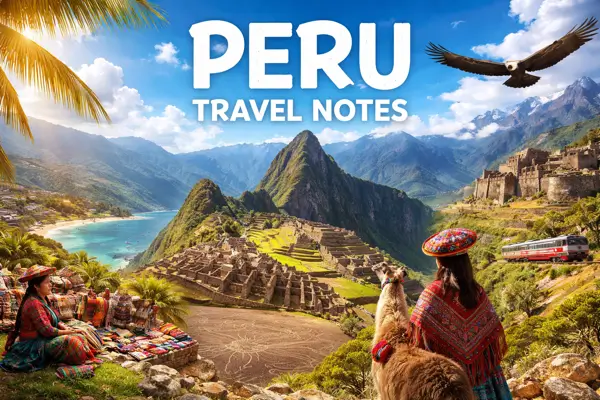
Peru has a strong indigenous heritage reflected in traditions, festivals, and cuisine.
-
Altitude awareness
Some destinations are at high altitude, so travelers should acclimatize gradually.
-
Market culture
Local markets are an important part of daily life and commerce.
-
Hospitality
Visitors are often welcomed warmly, especially in rural communities.